
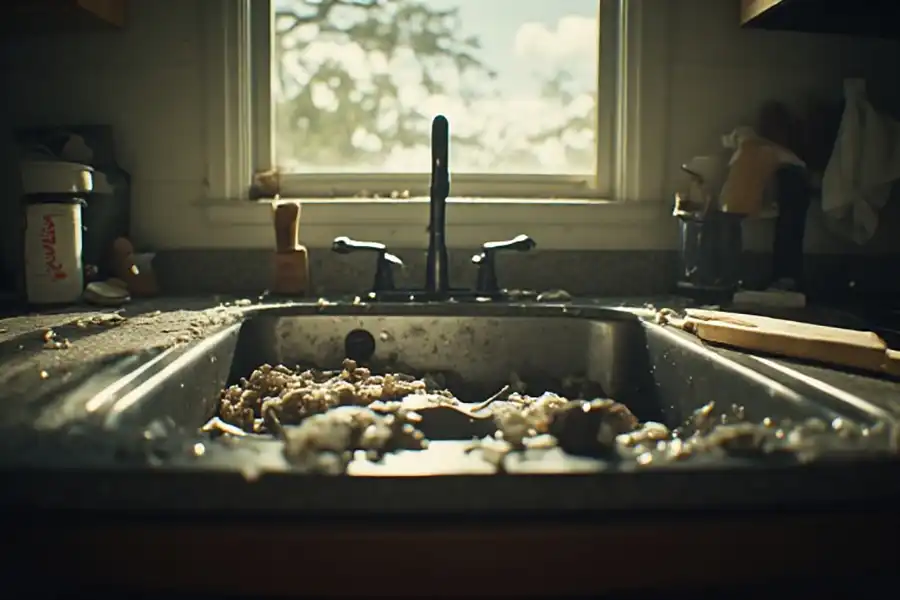
It’s 4:00 PM on Memorial Day, the burgers are ready, and suddenly your sink starts backing up with murky water. A clogged disposal easily ruins a backyard barbecue. According to industry data, long holiday weekends trigger a massive spike in service calls, meaning you face premium rates for emergency plumbing repairs for holidays.
Experience shows that well-meaning guests usually cause these disasters by scraping the wrong plates. The three most common holiday clog triggers—stringy corn husks, hard rib bones, and sticky potato salad scraps—routinely overwhelm standard units. To protect your pipes, rely on the most effective of all kitchen sink backup prevention tips: the “Texture Rule.” If a food scrap is stringy, hard, or sticky, it belongs in the trash rather than the drain.
Want to guarantee a stress-free, ten-minute cleanup? Sharing this instant scrap-sorting tool with your helpers keeps your water flowing smoothly. Mastering this basic rule ensures you spend your afternoon enjoying the party rather than battling a sudden plumbing catastrophe.
Corn Husks and Potato Peels
Prepping for a cookout leaves you with a mountain of fresh trimmings. While clearing counters quickly, you might wonder, can you put corn husks in the garbage disposal? Plumbers will tell you this shortcut is a guaranteed recipe for a holiday disaster.
Fibrous vegetable scraps expose a major weakness in disposal design. Because your unit uses blunt metal lugs rather than sharp knives, stringy items do not chop cleanly. Instead, they wrap around the inner ring, creating a fibrous binding that acts like a net to catch passing debris. Always throw these common offenders directly into the trash:
- Corn husks and silks
- Celery stalks
- Tough onion skins
Potato salad prep introduces another hidden danger to your plumbing. When potato peels get mashed inside the disposal, they undergo starch solidification and turn into a thick, sticky paste. This acts like heavy-duty glue inside your pipes, cementing that fibrous net and any trapped food into a solid blockage.
To ensure a smooth cleanup process, always scrape prep clippings straight into your compost bin. Keeping strings and starches out of the sink protects your afternoon, but cooking the main course brings an entirely new threat.
The Grease Trap Trap
Pulling ribs off the grill leaves a pan of hot, liquid fat that looks safe to pour down the drain. Enter the “Candle Wax” analogy. Think about hot wax dripping onto a cool table—it instantly hardens into a stubborn solid. Grill drippings behave exactly the same way when they hit the cold pipes behind your walls.
Once that fat cools inside your plumbing, it creates a sticky trap for other food scraps. Plumbers highlight this chain reaction in their top kitchen sink backup prevention tips. As that waxy layer builds, it seals off your drain. That is why the safe disposal of meat bones and fat means keeping them out of the sink entirely.
Instead of risking a plumbing emergency, the best way to dispose of BBQ grease is pouring it into an empty tin can. Let the drippings solidify on the counter, then toss the container into the trash. Keeping slippery fats out of the pipes leaves you with only solid scraps to handle.
Blender vs. Grinder
The secret to safely clearing leftover potato salad and BBQ scraps is unlearning a stubborn kitchen myth. Most people picture a disposal as a high-powered blender equipped with razor-sharp blades. In reality, there are no knives down that drain. The system actually relies on blunt metal blocks called impeller lugs, which act like small, rotating bats that smash food rather than slice it.
Once activated, a rapidly spinning plate creates centrifugal force that flings your scraps against a stationary grind ring. This ring functions like a heavy-duty cheese grater, mashing soft items into a washable pulp. Because of this blunt-force method, knowing what foods ruin a garbage disposal is critical for any host. Hard items like rib bones or peach pits simply cannot be forced through that metal ring.
When tough debris wedges against those lugs, the motor quickly overheats and locks up. A loud humming noise or murky water backing into the basin are immediate signs of a clogged kitchen drain pipe. Preventing this mid-party disaster requires keeping hard bones out entirely and processing safe scraps correctly.
The 3-Step Cold Water Ritual for Clog-Free Cleanup
Your first instinct during BBQ cleanup might be to blast hot water to melt away stubborn grease, but this actually invites disaster. Hot water liquefies fats, letting them travel deeper into your plumbing where they eventually cool and harden like stubborn candle wax against the pipe walls. Instead, always prioritize running cold water while grinding food. This chill acts as a cold water solidification strategy, keeping stray fats firm so the machine can shatter and flush them away safely before they coat your drain.
To prevent sink backups when helpful guests are clearing their plates, introduce them to the “Small Batch” feeding method. Ultimately, the proper way to use kitchen sink disposal units relies on a strict three-step sequence:
- Water first: Turn on a steady stream of cold water before flipping the disposal switch.
- Slow feed: Drop scraps in gradually rather than shoving down a whole plate of potato salad at once.
- Post-grind flush: Keep both the motor and the water running for a full 15 seconds after the grinding noise stops.
That final 15-second flush is your ultimate defense, acting as a strong current that carries remaining particles entirely out of your home’s pipes. While mastering this cold water ritual prevents stressful holiday emergencies, certain types of waste should bypass your plumbing entirely.
Composting vs. Grinding
Summer barbecues generate mountains of organic debris, forcing hosts to weigh composting vs garbage disposal for food waste. While your sink seems like a magic eraser, it cannot process massive holiday loads. Thick watermelon rinds and stringy corn husks are terrible for pipes but perfect for a backyard compost bin.
Diverting fibrous items away from your drain drastically reduces the mechanical strain on your kitchen plumbing. Separating this waste protects your home from sudden backups while returning nutrients to the earth. For reliable advice on protecting your system, experts at Red Lion Plumbing recommend keeping all tough, stringy scraps out of the sink entirely.
Even with strict habits, a well-meaning guest might accidentally scrape the wrong plate down the drain. When a rogue rib bone slips past your defenses, you need quick solutions to avoid an expensive holiday plumbing fee.
The ‘Red Button’ Rescue: What to Do if the Disposal Stops Humming
A sudden, ominous hum from your sink during a barbecue usually means the machine’s safety switch—the thermal overload—has tripped to protect the motor. Rather than panicking, you can resolve this independently in minutes.
Follow this four-step emergency checklist to restore order:
- Turn off the power: Disconnect the switch completely to keep your hands safe.
- Check the reset button: Push the small red square located on the very bottom of the unit.
- Use a hex wrench: Insert this tool into the underside center hole to manually crank the jam loose.
- Call a professional: Stop tinkering if the motor remains completely dead.
Freeing a stubborn blockage just requires wiggling that hex wrench back and forth until the internal parts move smoothly. Mastering this quick manual fix is vital for maintaining sink drainage during large events when rogue scraps inevitably sneak past your defenses.
Occasionally, persistent clogs or deep electrical faults require more than a simple push-button reset. If you need safe emergency plumbing repairs for holidays, a professional plumber can quickly rescue your kitchen. Once the mechanics are sorted, you can tackle minor sink cleanups.
The Lemon Peel Secret for Odor Removal
You made it through the barbecue without a sink catastrophe. Now that the guests are gone, establish a post-holiday maintenance routine by tossing a handful of ice cubes down the drain. Running cold water while grinding the ice acts like a scouring pad, safely knocking loose any hidden debris stuck to the internal ring.
Next, focus on cleaning garbage disposal after big party feasts by dropping in leftover citrus scraps from your drink station. Grinding lemon peels for disposal odor is a natural, plumber-approved way to leave your entire kitchen smelling incredibly fresh.
You now know exactly how to protect your plumbing, proving that a little prevention is always cheaper than an emergency holiday repair. If you ever run into a stubborn issue, the experts at Red Lion Plumbing are ready to help. Start this quick maintenance routine today, and host your next gathering with total confidence.
Red Lion Plumbing
14631 Timbergreen Dr
Magnolia, TX 77355
Tel: (281) 259-8117
View our Facebook Page