
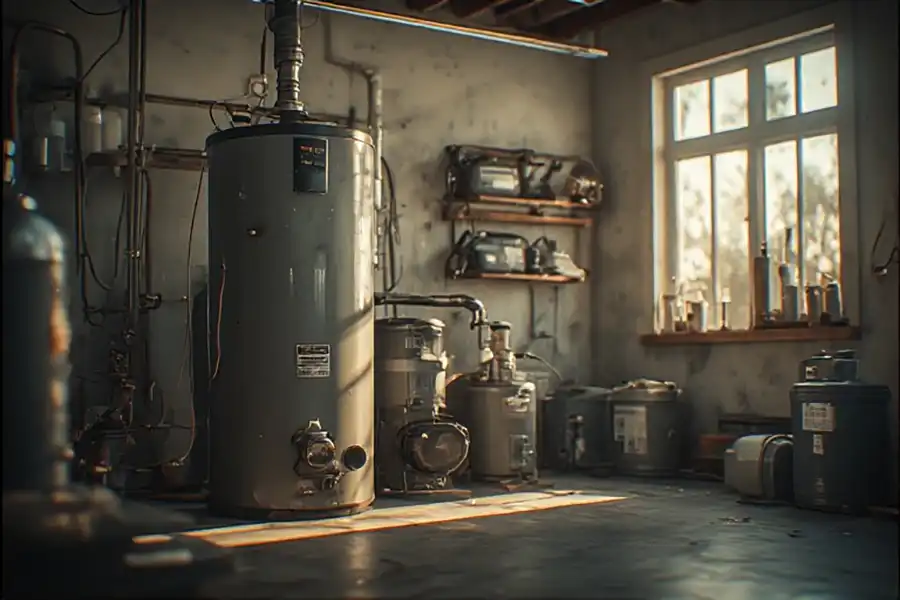
It’s 6:00 AM in Montgomery County, you step into the shower expecting a warm start, and suddenly the water is ice cold. Before panicking about replacement costs, let’s look at what is actually happening inside your garage tank. Losing hot water feels disastrous, but the solution is often straightforward.
According to local plumbing data, our area’s heavy mineral content frequently causes these sudden headaches. Magnolia’s hard water creates a sandy sediment layer inside the tank that drastically lowers your water heater recovery expectation—meaning it takes much longer to heat fresh water. Experiencing progressively shorter showers is actually among the most common signs of water heater failure.
Navigating these frustrations means knowing where simple maintenance ends and dangerous territory begins. While checking a tripped breaker or a pilot light is completely safe, tackling gas lines or internal pressure requires a professional. Recognizing exactly when to step back and hire a true water heater repair expert in Magnolia, TX keeps your family safe and prevents unexpected garage floods.
Is Your Water Heater Simply ‘Taking a Nap’? 3 Safety Checks Before You Call for Help
Waking up to an icy shower doesn’t always mean your tank is dead. Before spending money on emergency hot water system troubleshooting, you can safely investigate basic power issues.
Perform this simple three-step check first:
- Check the Breaker: Find your home’s electrical panel. If the water heater switch rests in the middle, it has “tripped” to prevent a power surge. Push it fully “Off,” then “On.”
- Inspect the Gas Valve: Ensure the handle on your gas pipe runs parallel to the line.
- Peek at the Pilot Light: Look for a small blue flame under the tank.
Think of that flame as a light switch. It heats a safety sensor called a thermocouple, which signals the main gas valve to open. If a draft blows it out, the entire system shuts down. Learning how to relight a pilot light safely using your manufacturer’s manual saves an unnecessary service fee.
When power and gas flow smoothly but the system struggles, it’s time to consider professional water heater repair in Magnolia, TX. If you’ve also noticed strange sounds, the culprit might be brewing inside. Magnolia’s notoriously hard water often plays a direct role in creating these unsettling noises.
The ‘Knocking’ Truth: Why Magnolia’s Hard Water is Making Your Heater Noisy
Living in Montgomery County means dealing with specific local challenges, particularly when it comes to plumbing. If you find yourself asking why your water heater is making popping sounds, rest assured it isn’t a ghost haunting your garage. That unsettling knocking noise is actually a direct result of Magnolia water quality. Our local water contains high levels of dissolved minerals like calcium and magnesium, which settle at the bottom of your tank over time.
Think of this mineral layer like sand sitting at the bottom of a cooking pot. As the burner fires up, it has to heat through that thick, hardened sediment before it can even reach the water. The popping sound you hear is literally steam bubbles struggling to escape from beneath that crusty layer of sediment calcification. Because this barrier creates thermal resistance—acting like a heavy blanket over the heat source—your unit has to work twice as hard just to give you a lukewarm shower.
Forcing your system to push through that rock-solid barrier naturally causes your monthly energy bills to skyrocket. Scheduling routine preventive maintenance for residential water heaters, like a professional tank flush, clears out this debris and restores your system’s efficiency. But sediment isn’t the only hidden threat inside your plumbing; another crucial component works silently to prevent rust entirely.
Sacrificial Anode Rods: The Tiny Part That Saves You Thousands
Hidden inside your tank is a metal wand acting as the ultimate bodyguard: the sacrificial anode rod. This rod volunteers to rust first, sacrificing itself to protect the steel lining. Once depleted, rust destroys your tank walls, forcing the premature water heater replacement Magnolia, TX homeowners dread.
Beyond preventing leaks, this component holds the answer for how to get rid of sulfur smell in hot water. Montgomery County well water often reacts with standard magnesium rods, creating a distinct “rotten egg” odor when you turn on the tap. Upgrading your system to a specialized aluminum-zinc rod stops this foul reaction instantly.
Inspecting this crucial part every three years offers massive sacrificial anode rod replacement benefits by preventing sudden garage floods. A healthy rod guarantees longevity, but it is only half the battle. Regular tank maintenance is also required to flush away the accumulated sediment.
Flushing Away the Sand: A Step-by-Step Guide to Annual Tank Maintenance
Living with Magnolia’s hard water is like constantly boiling a pot filled with sand; eventually, that grit coats the bottom of your tank and ruins its efficiency. Clearing out this rocky buildup is surprisingly simple, requiring only a standard garden hose, a bucket, and a reliable step-by-step water heater flushing guide.
Tackling this essential DIY water heater care takes about twenty minutes using these five straightforward steps:
- Power Down: Turn off the circuit breaker for electric units or switch gas valves to “Pilot.”
- Cold Water Shut-off: Turn the cold water inlet valve atop your tank to the off position.
- Hose Attachment: Screw your garden hose onto the bottom drain valve and route the other end to a safe outdoor drainage spot.
- Drain & Flush: Open the drain valve, then briefly turn the cold water back on to stir up and evacuate the stubborn sediment.
- Refill & Restart: Close the drain valve, refill the tank entirely, and restore the power.
Skipping that final refill step before flipping the breaker back on leads to a costly mistake known as “dry firing.” If the upper heating elements turn on without water submerging them, they will instantly burn out and snap. Practicing safe preventive maintenance for residential water heaters means always opening a hot water faucet inside your house until water flows steadily, proving the tank is completely full.
A clean tank runs quieter, saves money on monthly utility bills, and stops the bottom from rusting out prematurely. However, even with perfect annual care, mechanical parts eventually wear down and fail. If you notice pooling water after your flush is complete, it is time to address non-negotiable repair red flags before the drip becomes a flood.
When the Drip Becomes a Flood: Recognizing Non-Negotiable Repair Red Flags
Finding a garage puddle triggers instant dread, but not all leaks mean a doomed appliance. Because water swells as it heats—a process called thermal expansion—pressure inside your tank constantly builds. To prevent bursting, your system uses a safety feature called the T&P (Temperature and Pressure) Valve. If this upper brass valve weeps, it is simply releasing excess stress safely.
Regular temperature and pressure relief valve testing confirms if this component is failing. Lift the valve’s small lever briefly; if water shoots out and stops when dropped, it works. If it continuously drips, fixing a leaking water heater tank might just require a cheap part swap instead of a total replacement.
Conversely, rusty water seeping directly from the bottom casing means the structural steel has rusted through. This breached inner shell is unfixable, requiring an emergency water heater repair in Magnolia, TX before the drip floods your home. Once catastrophic failure forces an upgrade, evaluating tankless versus traditional models becomes the crucial next step for your Magnolia home.
Tankless vs. Traditional: Making the Right Replacement Choice for Your Magnolia Home
If your family constantly fights over the last drop of warm water during busy morning routines, upgrading might be on your mind. A typical tankless vs traditional storage heaters comparison comes down to how they handle your family’s demand. Standard tanks act like giant thermoses, keeping 50 gallons hot 24/7. Tankless units, however, use “on-demand” heating. They act like powerful flash-boilers, heating water instantly as it passes through. This provides endless warmth, limited only by the unit’s “flow rate”—the number of showers and sinks running simultaneously.
Choosing the ideal water heater replacement in Magnolia, TX involves this 10-year household breakdown:
- Lifespan: Tankless units often exceed 20 years, effectively doubling the life of traditional tanks.
- Upfront Cost: Standard tanks are cheaper initially, whereas tankless requires a higher installation investment.
- Energy Efficiency: Tankless slashes monthly utility bills by eliminating continuous “standby” heat loss.
- Space Requirements: Wall-mounted tankless systems free up valuable garage real estate.
Magnolia’s notoriously hard water impacts both choices. While standard tanks collect bottom sediment, tankless systems require annual “descaling”—flushing internal pipes with a specialized solution to remove mineral buildup and prevent a costly tankless water heater repair. Whether you prefer the endless showers of a tankless model or the familiar reliability of a tank, proper installation requires adherence to professional standards, including permits, expansion tanks, and local safety codes.
Professional Standards in Magnolia: Permits, Expansion Tanks, and Local Safety
Navigating Montgomery County plumbing permit requirements is your first crucial step before any installation begins. Securing this permit proves your setup meets local municipal safety standards. Furthermore, skipping this legal documentation can instantly void your homeowner’s insurance if an amateur pipe connection fails and eventually floods your garage.
Modern local water grids operate as closed-loop systems, meaning municipal water enters your house but cannot flow backward into the street. Because water physically swells when heated, this trapped pressure needs an escape route. Therefore, installing a thermal expansion tank is a mandatory safety code. This small container acts like a plumbing shock absorber, giving expanding hot water a safe space to go instead of dangerously straining your tank’s metal seams.
Professional oversight protects your home from disastrous DIY mistakes and prevents a full-blown emergency. By ensuring your setup remains legally compliant and mechanically safe, you secure your property investment against unexpected water damage. With your system safely installed, proactive maintenance remains the best defense against unexpected cold snaps.
Your 5-Minute Hot Water Action Plan: Staying Ahead of the Next Magnolia Cold Snap
You no longer have to cross your fingers and hope for hot water when a sudden Magnolia cold front hits. By understanding your system’s basic needs, proactive preventive maintenance for residential water heaters becomes your best tool for keeping utility bills low and avoiding expensive emergency replacements.
Keep your system running reliably with this Quick Maintenance Checklist:
- Monthly: Perform a quick visual inspection around the base for hidden leaks or rust.
- Annually: Flush the tank to clear out local hard water sediment.
- Biennially: Have the anode rod checked to prevent internal corrosion.
If you hear loud popping noises or spot pooling water, you’ve crossed the safe DIY threshold. For total peace of mind, trust Red Lion Plumbing as your go-to water heater repair expert in Magnolia, TX. A few minutes of simple maintenance today prevents a flooded garage tomorrow.
Red Lion Plumbing
14631 Timbergreen Dr
Magnolia, TX 77355
Tel: (281) 259-8117
View our Facebook Page